


1984 Trans Am 15th Anniversary " Pontiac's White & Blue COrner Carver"
Posted by Pete DeFazio on 23rd Sep 2026
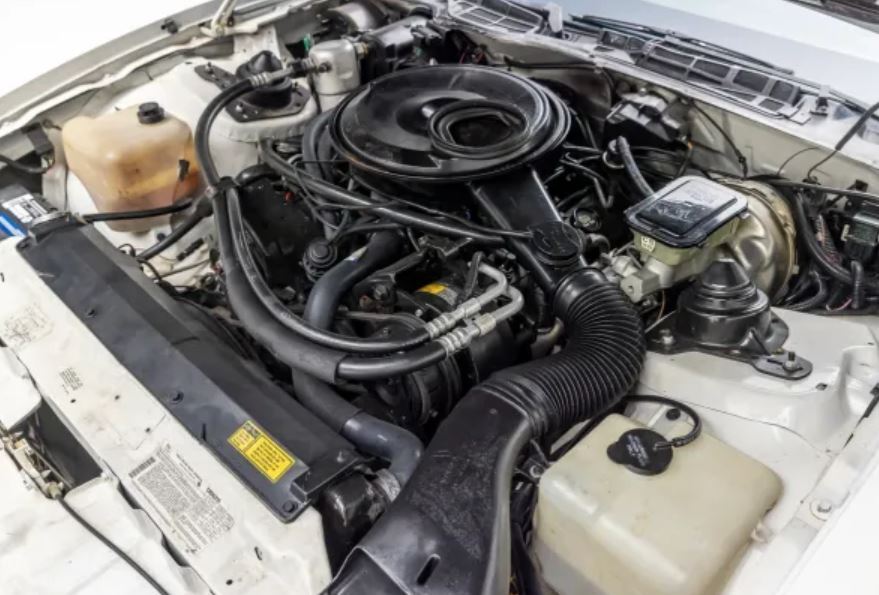
1984 Pontiac Trans Am 15th Anniversary: Pontiac’s White-and-Blue Corner Carver
It did not have fuel injection, a turbocharger or a giant second-generation hood bird. What Pontiac’s 1984 15th Anniversary Trans Am had was something more disciplined: real chassis development, unmistakable heritage and one of the most complete factory performance packages Detroit offered in the mid-1980s.
By 1984, the Trans Am name had survived 15 years of changing regulations, fuel crises and buyer tastes. The third-generation Firebird gave Pontiac a lighter, lower and more aerodynamic foundation. The division used the anniversary to connect that modern F-body with the white-and-blue 1969 original.
Pontiac’s reasoning was equal parts heritage and showroom theater. A factory advertisement called the Trans Am the most aerodynamic production car GM has ever tested
and promoted the We Build Excitement
identity. A 1,500-car anniversary edition gave dealers an attention-grabber and demonstrated the new platform with Pontiac’s best available engine, brakes, suspension, tires and interior hardware.
A Modern Tribute to the 1969 Original
The connection to 1969 was deliberate. Every 15th Anniversary car wore a white exterior with bright blue accents, recalling the only color combination offered on the first Trans Am. Pontiac extended the white treatment across the aero package, mirrors, rear spoiler, slatted taillamp bars and the unique 16-inch wheels. Blue pinstriping traced the body, while a blue hood appliqué wrapped around the functional offset cold-air induction bulge. Large blue “TRANS AM” door graphics, smaller rear identification and blue-and-white anniversary emblems on the sail panels made the car recognizable from every angle.
The look was technical as well as nostalgic. Its molded lower fascias, side skirts and air dam came from the aero treatment previewed on the 1983 Daytona Pace Car replica. Pontiac advertising cited a 0.32 drag coefficient with Hi-Tech wheels and 0.299 with the smoother aero wheels; the anniversary car traded a little slipperiness for its more capable 16-inch wheel-and-tire package.
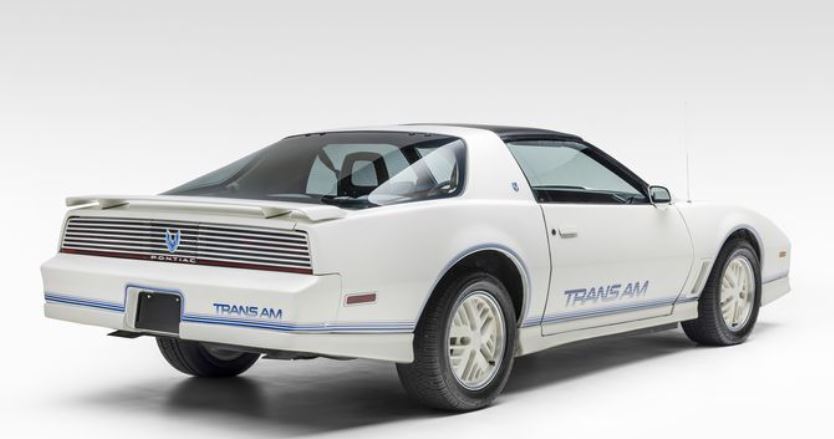
The Recaro Interior Was More Than a Name
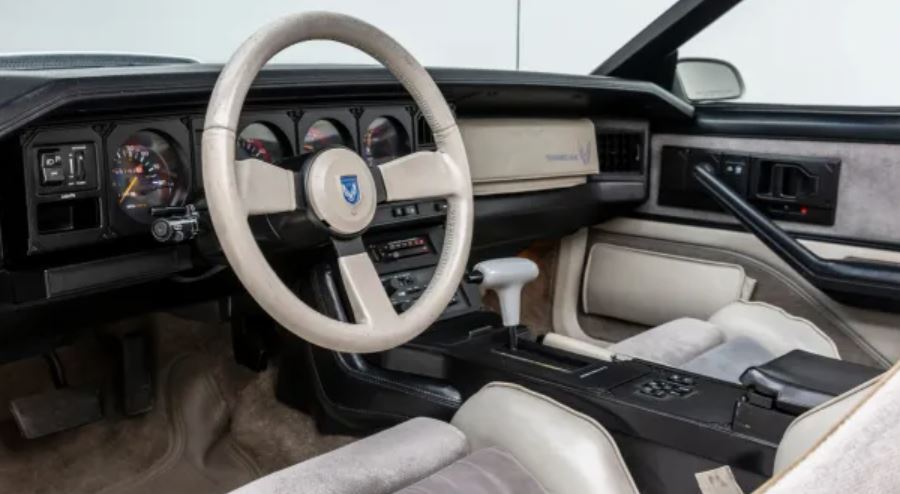
Open the long door and the anniversary package becomes even more specific. Pontiac fitted genuine Recaro front buckets trimmed in light sand-gray leather with medium sand-gray cloth inserts. “TRANS AM” was woven repeatedly into the center material, making the upholstery part of the car’s identification rather than a generic sport-seat upgrade. The Recaros held the driver more firmly through the corners, but they were still comfortable enough for the long highway trips these cars were built to handle.
A light-colored leather-wrapped steering wheel carried a blue-and-white anniversary medallion. The shifter knob and parking-brake handle matched, while the passenger map pocket carried blue Firebird and Trans Am graphics. T-tops were included. In an era of dark, monochrome cabins, the white, gray and blue interior looked nearly custom-built.
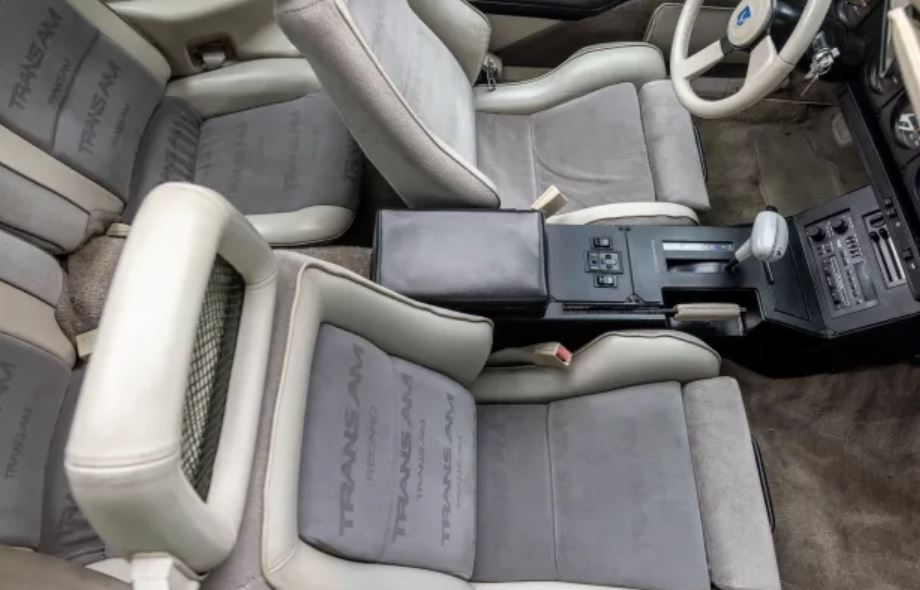
L69 Power: Honest Muscle for 1984
Under the hood sat Pontiac’s strongest available 1984 Firebird engine: the Chevrolet-built L69 5.0-liter H.O. V8. Its electronic four-barrel Quadrajet, 9.5:1 compression and functional cold-air system produced 190 horsepower at 4,800 rpm and 240 lb-ft at 3,200. For context, the standard LG4 Trans Am made 150 horsepower and the hottest Mustang GT 5.0 was rated at 175.
Buyers chose a Borg-Warner T-5 five-speed or 700-R4 four-speed automatic overdrive. Production split 500 manuals and 1,000 automatics. Manual cars added a hydraulic clutch, lightweight flywheel and aluminum bellhousing. A five-speed test car reached 60 mph in 7.02 seconds and ran 15.44 at 91.5 mph—genuine American performance in 1984.
| Specification | 1984 15th Anniversary Trans Am |
|---|---|
| Engine | L69 5.0L (305-cu.-in.) H.O. V8, electronic four-barrel carburetor |
| Output | 190 hp at 4,800 rpm; 240 lb-ft at 3,200 rpm |
| Transmissions | T-5 five-speed manual or 700-R4 four-speed automatic overdrive |
| Period performance | 0–60 mph: 7.02 sec; quarter-mile: 15.44 sec at 91.5 mph |
| Handling and braking | 0.87 g skidpad; 60–0 mph in 130 ft |
| Wheels and tires | 16×8 white Hi-Tech wheels; P245/50VR16 Goodyear Eagle tires |
| Production | 1,500 total: 1,000 automatic and 500 five-speed |
The Real Story Is Under the White Wheels
The 15th Anniversary car’s most important engineering may have been below eye level. Pontiac installed white 16×8-inch convex aluminum wheels—an F-body first—wrapped in directional P245/50VR16 Goodyear Eagles. Contemporary reporting credited the car with 0.87 g of lateral grip. The chassis used gas-pressure dampers, revised tuning and thick anti-roll bars, including a 25-mm rear bar paired with a 34-mm front bar. Four-wheel disc brakes used 10.5-inch ventilated front rotors and 10.5-inch solid rear rotors; period testing stopped the car from 60 mph in 130 feet.
History requires precision here. Pontiac Sales and Information Bulletin 84-9, dated November 17, 1983, said the 15th Anniversary model will feature
the WY6 package with four-wheel discs. Later sources frequently call it WS6. Whatever the shorthand, owners should document an individual car through its service-parts label, invoice or Pontiac Historic Services paperwork
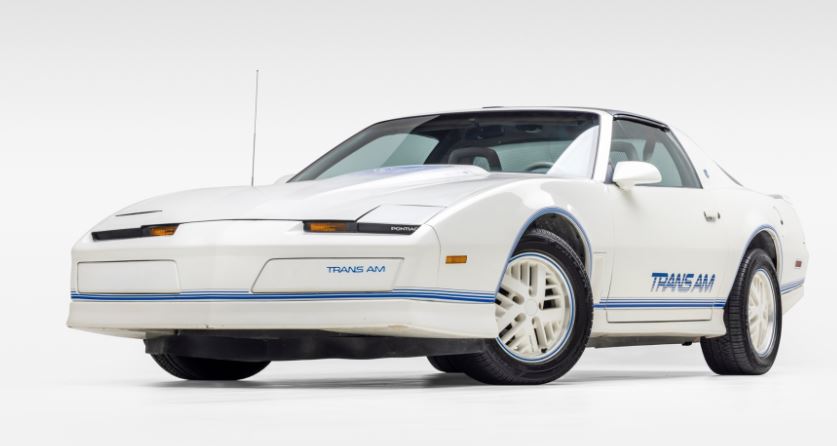
The 16×8 wheel and P245/50VR16 tire package was an F-body first and central to the car’s 0.87-g cornering ability.
Limited Production, Serious Price
Pontiac built 55,374 Trans Ams for 1984, but only 1,500 anniversary cars—less than three percent of the total. The package added about $3,499 to a roughly $10,700 base Trans Am, placing the basic combination near $14,200 before options and destination. One documented car carried a $17,981 window sticker—serious money when a new Corvette started in the low-$20,000 range.
This was never meant to be a volume Firebird. It was a halo car for buyers who understood that performance meant more than horsepower. Bigger wheels, serious tires, aggressive suspension tuning and coordinated aero would soon define later third-generation performance models.
Why the 15th Anniversary Car Still Matters
Its 190 horsepower does not sound heroic today, yet this Trans Am represents Detroit learning how to build performance again through reduced weight, aerodynamics, gearing, tires, brakes and chassis balance. It could run with the strongest American four-seat cars of its day and cruise home in overdrive with the air conditioning on.
For restorers, originality is everything. The Recaro upholstery, anniversary horn-button emblem, blue graphics, white taillamp bars, functional hood hardware and front- and rear-specific wheels are difficult and expensive to replace correctly. A prospective buyer should verify the service-parts identification label, drivetrain, wheel orientation, interior materials and documentation rather than relying on white paint and reproduction stripes alone.
The 15th Anniversary Trans Am endures because it was not merely a decal package. It looked back to 1969, but its message pointed ahead: a car became special when its engine, seats, tires, brakes, suspension and aerodynamics worked together. For the blue-collar enthusiast who values engineering as much as flash, that may be the most Pontiac idea of all.
Sources and Archival Notes
- General Motors Heritage Archive and Special Collections — GM archive scope, historical photography and commercial visual-media request instructions.
- Pontiac Motor Division, 1984 Pontiac full-line sales brochure — factory-issued model, equipment and marketing information.
- Pontiac Motor Division, 1984 Firebird Trans Am factory advertisement — aerodynamic and performance claims preserved as a scanned original.
- Pontiac Sales and Information Bulletin No. 84-9, November 17, 1983 — package content transcribed from a preserved Pontiac Historic Services packet.
- High Performance Pontiac / Hot Rod — L69 specifications, chassis, brake, tire and production details.
- Old Car Memories period performance index — MotorTrend July 1984 road-test results.
- ThirdGen.org 1984 Pontiac Firebird technical history — production, powertrain and third-generation equipment data.
- Bring a Trailer, documented one-owner 1984 15th Anniversary Trans Am — window-sticker pricing and original equipment reference photographs.
Note Hawks Motorsports does have a 1984 15th Anniversary Trans Am for sale which will need a restoration due to smoke damage. Inquire about this car: Bruce@Hawksmotorsports.com