


Pontiac Firehawk: The SLP-Built F-Body That Deserved More Respect
Posted by Pete DeFazio on 18th Sep 2026
Pontiac Firehawk: The SLP-Built F-Body That Deserved More Respect
Before every late-model muscle car arrived with 450 horsepower and an electronic launch mode, Pontiac and Street Legal Performance built something meaner the old-fashioned way: more airflow, more tire, better suspension and just enough factory blessing to put it on a dealer invoice.
For blue-collar F-body people, the Pontiac Firehawk occupies a special place. It was not a sticker package dreamed up in a marketing meeting. It was a working hot rod engineered by SLP, sold through Pontiac dealers and backed by the kind of hardware enthusiasts were already installing in their own garages. The Firehawk story stretches from the final days of the third-generation Firebird through the last year of the fourth-gen in 2002—and its first chapter was almost unbelievable.
The 25-Car Hammer
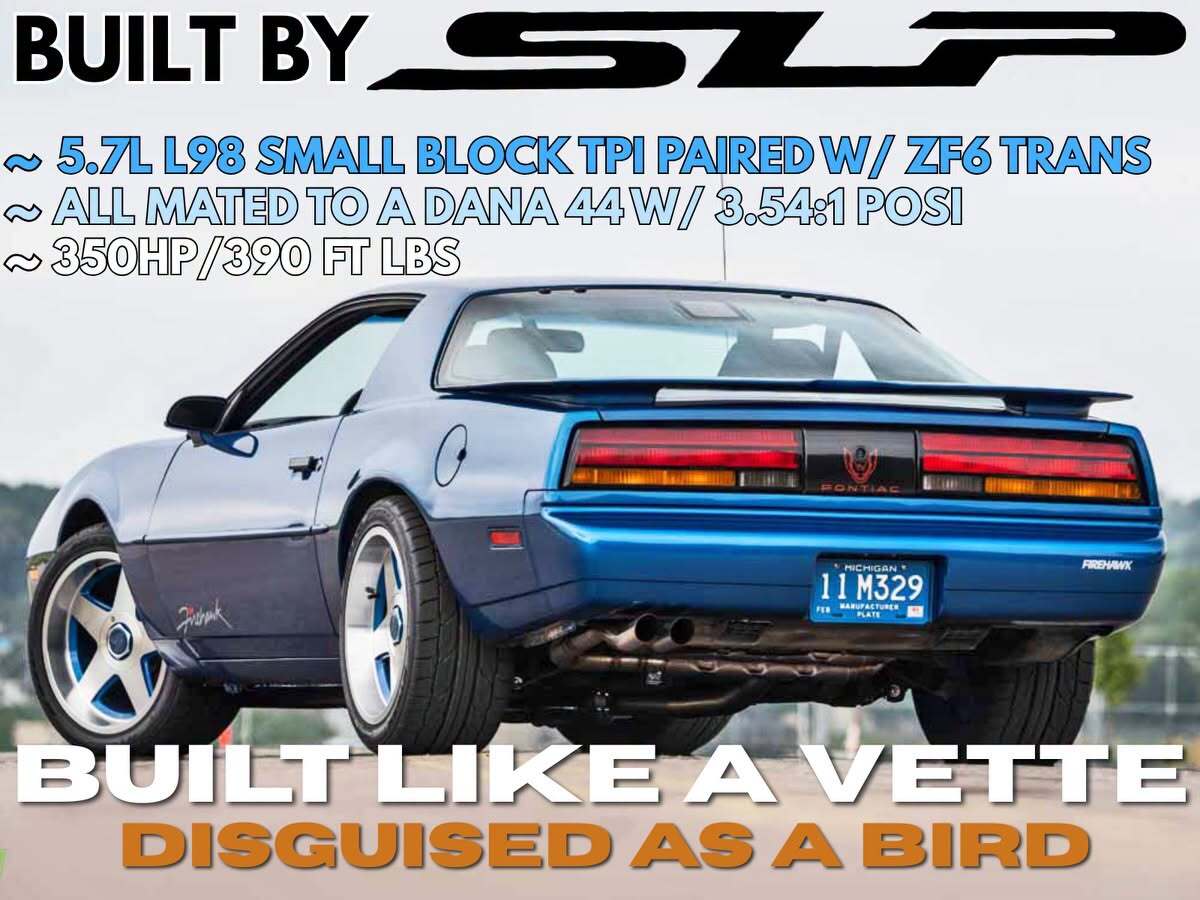
The original Firehawk combined an SLP-built 350, ZF six-speed and Dana 44 rear axle—serious equipment by any 1992 standard.
The original production Firehawk was built from the 1991–1992 Firebird Formula 350. SLP reworked the 5.7-liter L98 small-block to 350 horsepower and 390 lb-ft, then paired it with a Corvette ZR-1-derived ZF six-speed, carbon-fiber clutch and Dana 44 rear axle with 3.54 gears. Seventeen-inch Ronal wheels wore massive-for-the-period 275/40ZR17 Firestone Firehawk tires.
Period numbers still hit hard: SLP advertised 0–60 mph in 4.6 seconds and a 13.2-second quarter-mile at 107 mph. MotorTrend recorded 4.9 seconds to 60, 13.4 at 105, 0.94 g on the skidpad and 60–0 braking in 135 feet. Car and Driver listed a 3,448-pound curb weight. In other words, this mullet-era hatchback could embarrass far more exotic machinery.
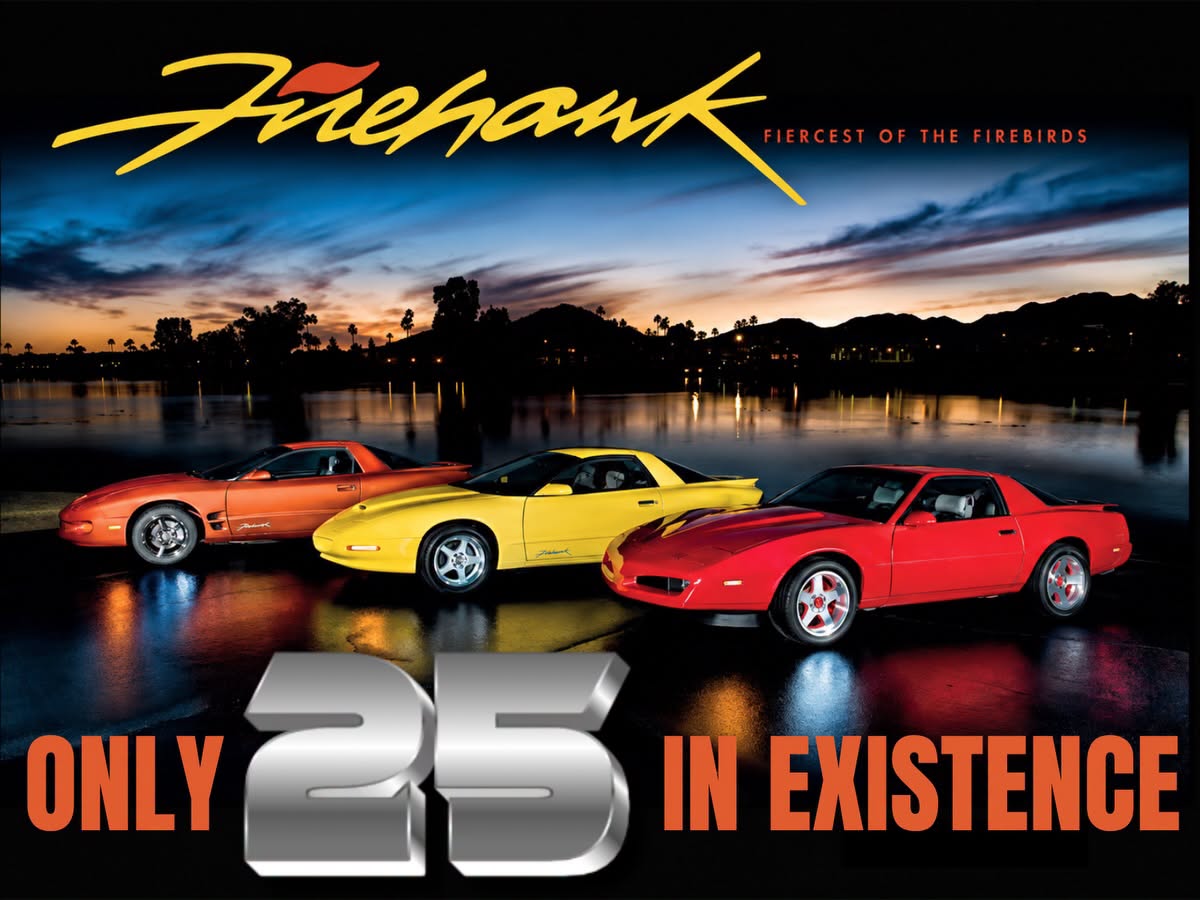
That capability was expensive. The standard Firehawk listed for $39,995, and the $9,995 Competition Package added 13-inch Brembo brakes related to the Ferrari F40 setup, a roll cage, Recaro seats, harnesses, an aluminum hood and rear-seat delete. Only 25 production cars were completed: 21 red and one each in aqua, white, blue and green. Just one reportedly had T-tops and one was a convertible. It was essentially a street-legal club racer hiding under familiar Pontiac sheetmetal.
From Hand-Built Bruiser to Dealer-Ordered Muscle
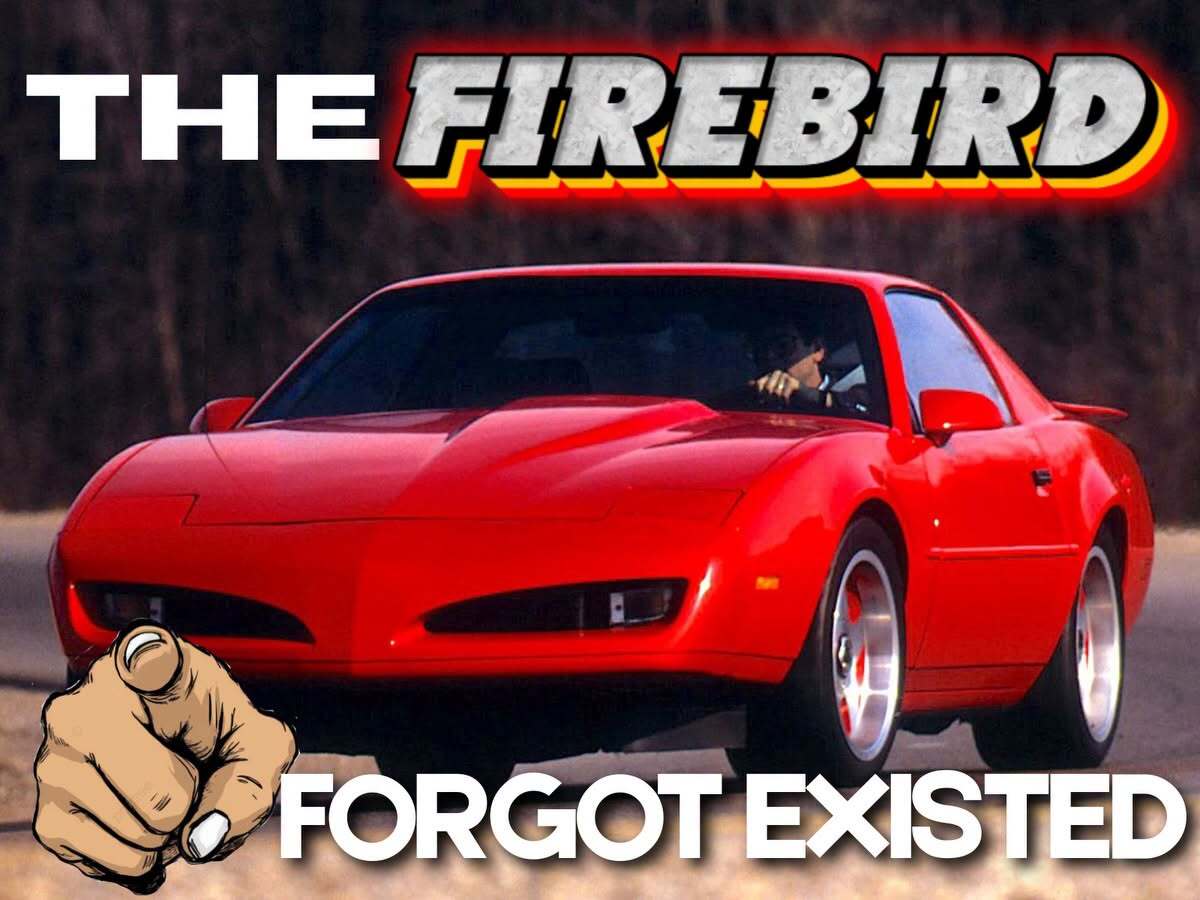
The fourth-generation Firebird gave SLP a more practical platform. In 1993, the Formula-based Firehawk used the new LT1 V8, functional Ram Air induction, freer breathing exhaust, 17-inch wheels and model-specific graphics. Output began at 300 horsepower—strong money in an era when a Mustang GT made 215—and a period test put the 1993 car at roughly 4.9 seconds to 60 and 13.5 through the quarter.
SLP kept developing the package. An optional exhaust pushed some LT1 cars to 315 horsepower. Bilstein suspension, a Hurst shifter and limited-slip upgrades sharpened the chassis. Convertibles arrived for 1995. In 1997, 29 hardtop six-speed cars received a balanced-and-blueprinted 330-horse LT4 derived from the Corvette Grand Sport. Those LT4 Firehawks are among the most sought-after fourth-gen Pontiacs today.
There was no 1998 Firehawk, but the bird returned in 1999 with GM’s aluminum LS1 and availability on both Formula and Trans Am models. The 1999 car made 327 horsepower; ratings climbed to 330 in 2000, 335 in 2001 and as high as 345 in 2002 with the Blackwing intake. A MotorTrend-tested 1999 Firehawk ran 0–60 in 5.1 seconds and the quarter in 13.6 at 104.5 mph. Those numbers may look ordinary beside a modern automatic performance car, but a six-speed LS1 Firehawk still feels mechanical, loud and alive in a way a spreadsheet cannot explain.
| Model | Engine / Output | 0–60 mph | Quarter-mile | Handling / Weight | New-price context |
|---|---|---|---|---|---|
| 1991–92 original | 5.7L L98, 350 hp / 390 lb-ft | 4.9 sec tested | 13.4 sec @ 105 mph tested | 0.94 g; 3,448 lb | $39,995; Competition Package +$9,995 |
| 1993 LT1 | 5.7L LT1, 300 hp | About 4.9 sec | About 13.5 sec | 275/40ZR17 tires; optional suspension upgrades followed | More attainable SLP dealer conversion |
| 1999 LS1 | 5.7L LS1, 327 hp / 345 lb-ft | 5.1 sec tested | 13.6 sec @ 104.5 mph | 17 × 9.5-in wheels; 275/40ZR17 tires | WU6 dealer-order package |
| 2002 LS1 | 5.7L LS1, up to 345 hp / 345 lb-ft | Roughly 5.0 sec* | Roughly mid-13s* | Optional Bilstein/Eibach suspension; 35/21-mm bars | Loaded documented example: $36,797.15 |
*Representative period LS1 F-body performance varied with transmission, surface, tires and test procedure.
Production: Rare, Then Merely Uncommon
†Includes 29 LT4 cars; some official tables list 116 standard Firehawks separately. ‡Period and registry sources vary between 1,501 and 1,503.

Color adds another layer to the hunt. The first 25 were overwhelmingly red, while later cars followed the broader Formula and Trans Am palettes. Black became especially associated with the model: of approximately 1,132 Trans Am Firehawk coupes invoiced in 2002, 430 were black. Bright Red, White, Pewter, Navy Blue Metallic and Sunset Orange Metallic are among the recognizable late-production finishes, while the black-and-gold 2001 10th Anniversary Firehawk was limited to 139 cars.
What Is a Firehawk Worth Now?
The market finally recognizes that a real Firehawk is more than a regular Firebird wearing decals—but condition, documentation and originality control the money. JD Power currently places a 2002 Firehawk at $18,500 low retail, $27,400 average and $33,800 high retail. Recent asking prices cluster from the upper-$20,000s into the mid-$30,000s, while exceptional low-mile, rare-color, convertible, LT4, 10th Anniversary and original 25-car examples can move far beyond guidebook figures.
For buyers, the numbered SLP plaque, original window sticker, SLP invoice, correct hood, wheels, intake and exhaust pieces matter. Modified examples can be terrific drivers, but missing Firehawk-specific parts can be costly to correct. For owners, that is also the beauty of the car: underneath the rarity is a tough, understandable F-body that can still be maintained, driven and enjoyed.
The Firehawk never needed a giant wing or European badge to prove its point. It was Pontiac attitude sharpened by SLP engineering—a car built for people who understood that horsepower is only useful when the clutch, rear axle, tires, brakes and suspension are ready to work with it. More than two decades after the final car left SLP, that formula still makes sense.
Sources
- Firehawk Association of America — Official Pontiac production reports and annual production-number index
- Car and Driver — 1992 Pontiac Formula Firehawk archive test and specifications
- MotorTrend — 1999 SLP Pontiac Firebird Firehawk road test
- LSX Magazine — SLP Firehawk history and model-year changes
- ClassicCars.com Journal — 2002 Trans Am Firehawk equipment and production breakdown
- High Performance Pontiac / Hot Rod — 2002 Firehawk pricing, equipment and production context
- JD Power — Current 2002 Pontiac Firehawk retail values
- CLASSIC.COM — Current listings and recent market activity