


Trans Am Daytona 500 Pace Cars The ultimate "May I borrow the keys"
Posted by Pete DeFazio on 20th May 2026
The Ultimate "May I borrow the keys?"
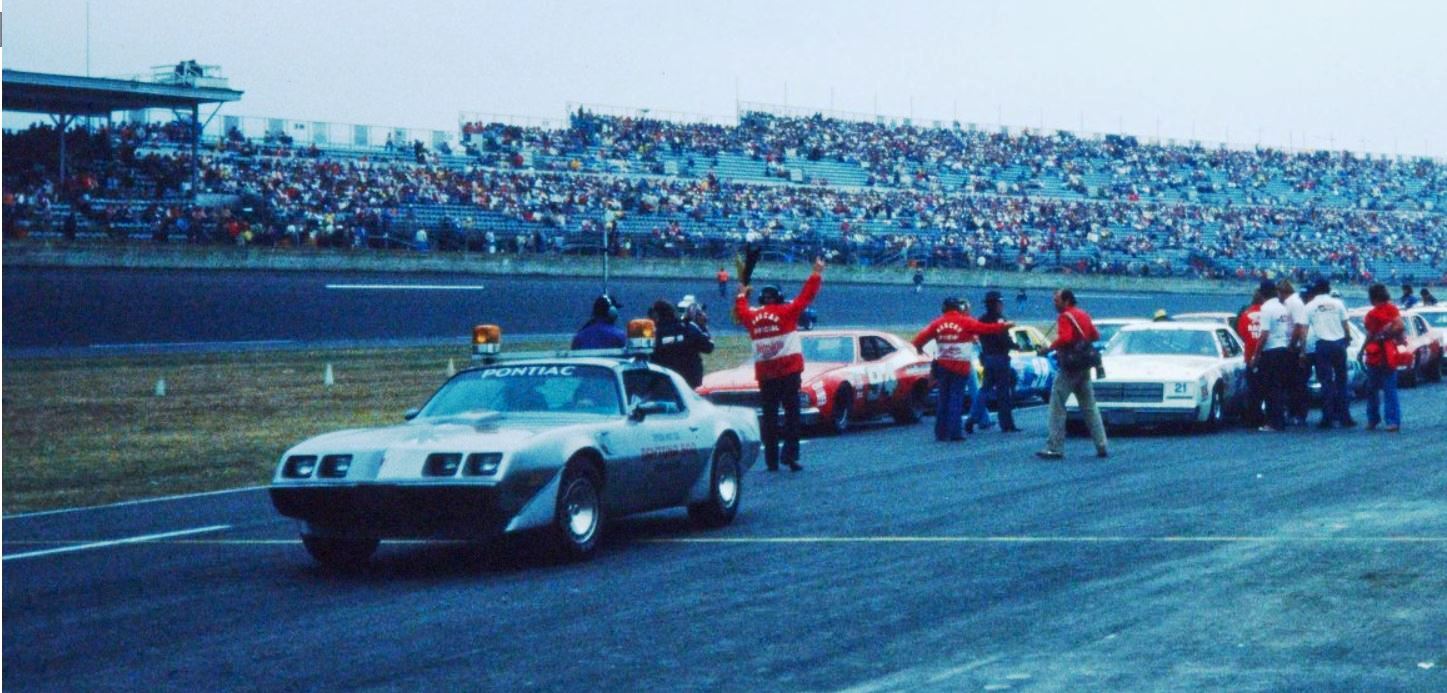
The Pontiac Trans Am owned the "Offical Pace Car" crown in NASCAR from 1979 - 2002 with 15 appearances.
We thought you would enjoy a snap shot that shows the "Bandit" mentallity never quite left the name plate.
Enjoy this video below and then catch up on the history of the Trans Am and NASCAR, from 1979 - 2002 a match made in heaven!
The Pontiac Trans Am Pace Car Story
1979–2002
From the TATA Silver Anniversary Thunder to Talladega’s Unauthorized Lap Dance ?
The Pontiac Trans Am was never a shy machine. It did not enter a room; it arrived with a shaker scoop, wheel spoilers, graphics large enough to be read from a crop duster, and the facial expression of a car that had just heard disco was ending and decided to keep the party alive anyway. As a NASCAR pace car, especially at Daytona, the Trans Am became Pontiac’s rolling parade marshal from 1979 through 2002, appearing as a Daytona 500 pace car in 1979, 1980, 1981, 1982, 1983, 1984, 1985, 1986, 1987, 1993, 1994, 1995, 1996, 1999, and 2002. That is fifteen Daytona 500 appearances, a serious resume for a car that looked as though it was born wearing mirrored sunglasses.
The Trans Am name itself began earlier, in 1969, when Pontiac released the Trans Am Performance and Appearance Package for the Firebird. It was not just a decal exercise, although decals would later become part of the car’s mythology. The Trans Am blended handling attitude, Pontiac performance, and theater. By the late 1970s, that theater had become national pop culture. So when the 1979 10th Anniversary Trans Am led the Daytona 500, it was not merely pacing a race; it was opening a chrome-plated curtain.
The timing was almost absurdly perfect. The 1979 Daytona 500 was the first live flag-to-flag broadcast of a 500-mile stock car race in the United States, and it ended with Richard Petty winning after Donnie Allison and Cale Yarborough crashed while battling for the lead, followed by the famous infield fight involving Yarborough and the Allison brothers. NASCAR did not just get a television audience that day; it got a national campfire story. Out front before the chaos was the Pontiac Trans Am, silver, low, loud in spirit, and perfectly dressed for the first great televised NASCAR opera.
For 1980 and 1981, Pontiac leaned into the turbo age with the Turbo Trans Am, a car that promised tomorrow using boost, bird graphics, and enough early-eighties optimism to power a mall arcade. The 1980 Turbo Trans Am is especially interesting because sources note it paced Daytona and was also tied to Indianapolis 500 pace-car duty that same year, giving Pontiac rare double-duty glamour across America’s two great oval traditions.
Then came the third-generation cars. Starting in 1982, the Trans Am changed shape completely. The old coke-bottle muscle silhouette gave way to a wedge, hidden headlights, aero bodywork, and the kind of stance that made every parking lot feel faintly like a pit lane. Daytona kept calling: 1982, 1983, 1984, 1985, 1986, and 1987 all appear in the Daytona pace-car record as Pontiac Trans-Am years. The Trans Am had moved from Burt Reynolds swagger to wind-tunnel futurism without losing its talent for attracting eyeballs.
The 1983 Daytona 500 pace car deserves a little extra spotlight. It arrived during a strange performance drought in Detroit, yet the Trans Am still managed to look special. Contemporary enthusiast references and auction histories describe the 1983 Daytona pace editions with distinctive white-and-charcoal graphics, aero trim, T-tops, Recaro-style interior flair, and commemorative pace-car markings. It was proof that even when horsepower numbers were being held hostage by emissions rules and fuel economy anxiety, Pontiac still understood the ancient art of making a car look like trouble with a window sticker.
Now park the Daytona story for a moment, because Talladega, May 4, 1986, deserves its own neon warning label. Just before the 1986 Winston 500, a 20-year-old fan named Darren Crowder got into the Pontiac Trans Am pace car and drove onto the track. Multiple accounts describe the episode as a pre-race pace-car theft that turned into an on-track chase before officials and law enforcement stopped him. A Yahoo Autos recap says officials set up a roadblock on the track, forcing him to slow and stop before police pulled him from the car. The Drive describes Crowder finding the ceremonial Pontiac Trans Am unattended and taking laps before NASCAR realized the driver was very much not the assigned pace-car driver.
This is where the Trans Am legend becomes almost too on-brand. A pace car is supposed to represent order. It controls the field, sets the tempo, keeps the wolves in formation. The Trans Am, however, always had a little raccoon electricity in its wiring harness. So when one got stolen at Talladega and started making unauthorized laps, the moment felt less like a random incident and more like the car briefly reading its own brochure and taking it literally. Police and track workers eventually blocked the racing surface, stopped the Pontiac, and took Crowder into custody. NASCAR’s race went on, with Bobby Allison winning the Winston 500, but the pace-car caper became the kind of story that refuses to stay in the garage.
After the third-gen Daytona run ended in 1987, Pontiac handed pace duties to other models for several years, including the Grand Prix and Turbo Grand Prix. But the Trans Am returned in the fourth-generation era, pacing Daytona in 1993, 1994, 1995, and 1996. These cars looked sleeker and more predatory, with the long nose, low roof, and smooth body sides of the early LT1 era. The 1994 official Daytona 500 Trans Am pace car, for example, is documented with white paint, bold blue striping, Daytona 500 graphics, Winston Cup branding, and a 5.7L LT1 V8.
In 1999, the Trans Am returned again for Daytona in a year rich with symbolism: the 30th anniversary of the Trans Am nameplate. By then, Pontiac’s performance identity had become a strange but appealing cocktail of nostalgia and modern speed. The fourth-gen WS6-era cars had real bite, with Ram Air hoods and aggressive styling that made them look less like pace cars and more like something the pace car might have to restrain. The Daytona pace-car list records Pontiac Trans-Am for 1999, and enthusiast records note the 1999 appearance as part of the Firebird/Trans Am’s long Daytona pacing history.
The final act came in 2002, the last model year for the Pontiac Firebird and Trans Am. Daytona again used the Pontiac Trans-Am as pace car, giving the model one last official trip at the front of the field before the nameplate exited production. That closing lap matters. The Firebird had been built from 1967 through 2002, and the Trans Am had lived from its 1969 package beginnings through the end of Pontiac’s F-body line. For a car so closely associated with bravado, graphics, and V8 attitude, ending with pace-car duty was fitting. It left the stage not as background transportation, but as the car everyone had to follow.
So the Trans Am pace-car story is not just a list of years. It is a timeline of American performance culture trying to keep its feathers bright through changing eras: late-second-gen silver anniversary swagger, early turbo experimentation, third-gen aero futurism, fourth-gen LT1 muscle, and one final 2002 bow. And tucked in the middle is Talladega 1986, when the pace car briefly stopped being a ceremonial official vehicle and became the world’s most televised stolen Pontiac. Ridiculous? Absolutely. Memorable? Permanently. Very Trans Am? Painfully, perfectly, hilariously yes.
Hawks Motorsports
Pete DeFazio